Breaking News

-+91-9937148622 |
prerana_bgr@rediffmail.com |
Monday 19th October 2026 |
R.N.I. Regd No. ODIODI/2010/46693
Breaking News
19-Oct-2026
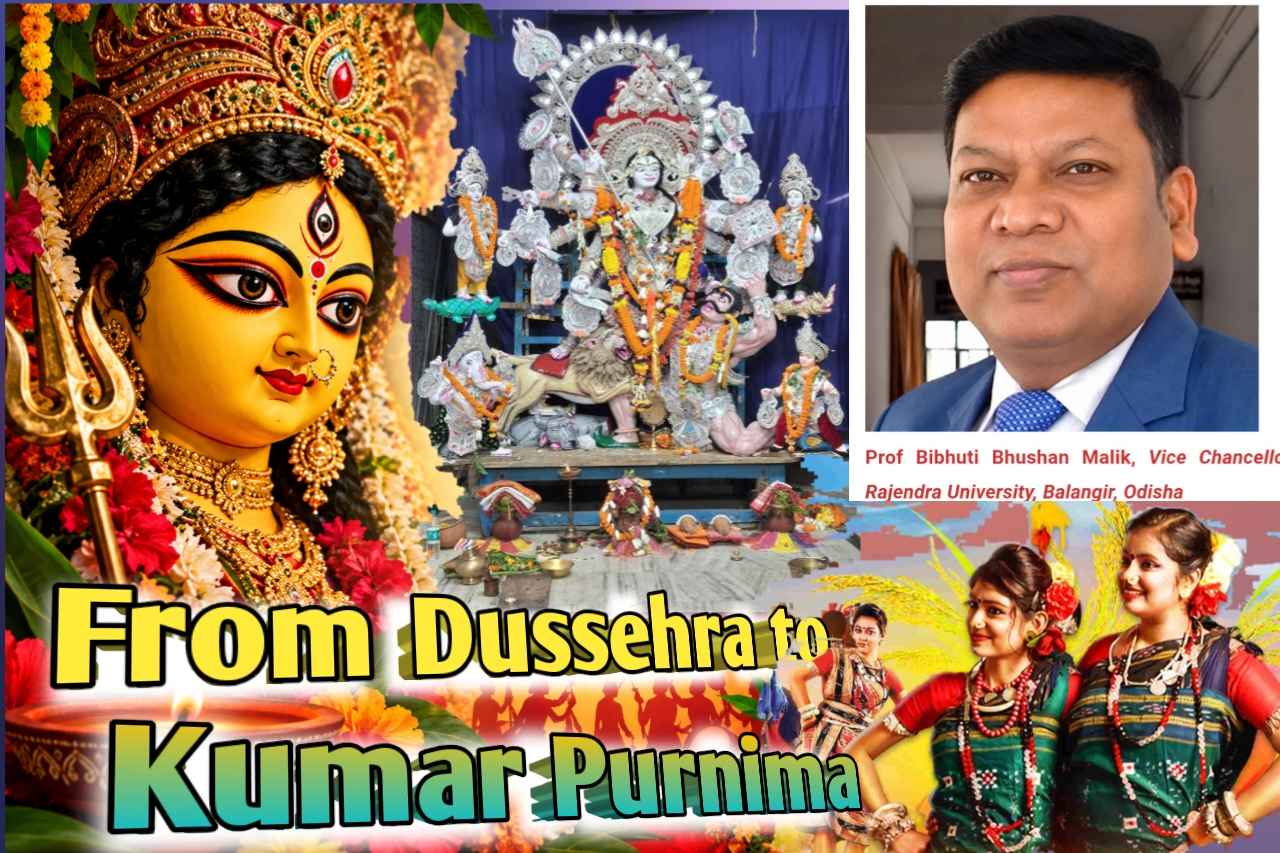
Odisha’s religious and cultural traditions reveal a profound understanding of the relationship between divine power, material prosperity, knowledge and social well-being. The transition from Durga Puja and Vijayadashami to Kumar Purnima, celebrated on the autumn full-moon night, is not merely a sequence of festivals. It represents a deeper civilisational philosophy in which the victory of good over evil is followed by prayers for abundance, wisdom, harmony and the continuity of life. Kumar Purnima, also known as Sharad Purnima, is celebrated on the full moon of the Odia month of Ashwina, generally about five days after Vijayadashami. Across Odisha, the festival brings together the worship of Maa Lakshmi, the youthful radiance associated with Kumar or Kartikeya, and the traditional observances of unmarried girls who offer prayers to the Sun and the Moon. Inseveral regions, the occasion is particularly
associated with Gaja Lakshmi Puja, celebrating the Goddess as the embodiment of wealth, fertility, fortune and abundance.
Why does the worship of the Goddess of abundance follow so closely after Dussehra?
The answer lies in the complementary symbolism of these observances. Vijayadashami celebrates the triumph of righteousness over evil and the restoration of cosmic order through the power of Maa Durga. The following days lead towards the luminous full moon, when devotees invoke Maa Lakshmi for prosperity, well-being and a life of dignity.
In philosophical terms, the destruction of evil is only the beginning of a meaningful social order. A society must also cultivate prosperity, knowledge, compassion and ethical conduct. Maa Durga represents the power to overcome adversity; Maa Lakshmi represents the resources and auspiciousness necessary to sustain life; and Maa Saraswati represents wisdom, learning and discernment.
These are not competing divine principles. They are complementary dimensions of Shakti, the primordial feminine power that sustains the universe.
The full moon itself has a special place in Indian religious imagination. Its luminosity, associated with the serenity of the autumn sky, symbolises completeness, tranquillity and fulfilment. The festival therefore connects cosmic rhythms with human aspirations, family life.
Any discussion of Lakshmi worship in Odisha remains incomplete without reference to the Lakshmi Purana, composed by the great Odia devotional poet Balarama Dasa, generally dated to the fifteenth century. Although known as a Purana, it is a distinctive Odia devotional composition rather than one of the eighteen classical Sanskrit Mahapuranas.
The text occupies a special place in Odisha’s religious and social consciousness. Its narrative centres on Maa Lakshmi, her relationship with Lord Jagannath and the social consequences of her decision to visit the home of Shriya, a woman from a socially marginalised community.
When Balarama Dasa portrays Maa Lakshmi entering Shriya’s home, the episode challenges the discriminatory practices and notions of ritual purity prevalent in society. Lord Jagannath’s displeasure and the resulting separation from Lakshmi expose the contradictions between religious authority and the ethical principles of devotion, dignity and equality.
The message is revolutionary in its simplicity: the Goddess does not measure human beings by caste, wealth or social standing. Cleanliness, devotion, compassion and righteous conduct are more important than inherited privilege.
The Lakshmi Purana thus transforms the worship of prosperity into a lesson in social justice. Wealth without compassion is incomplete, and religious observance without respect for human dignity loses its moral purpose.
This is particularly relevant to Odisha, where the worship of Maa Lakshmi is deeply connected with household prosperity, agricultural abundance and the aspiration that every family should enjoy food, security and dignity.
The Gaja Lakshmi form, in which the Goddess is associated with elephants and auspicious symbols of abundance, has particular significance during Sharad Purnima. Elephants are traditionally associated with royal authority, rain-bearing clouds, fertility and prosperity. Their presence alongside the Goddess evokes a world in which human flourishing depends upon the balance of natural and material resources.
The autumn full moon follows the monsoon season, when agricultural communities begin to look towards the next stages of cultivation and harvest. The worship of Lakshmi can therefore be understood as an expression of gratitude for nature’s gifts and a prayer for the security of the household.
This association becomes especially meaningful in an agrarian society such as Odisha, where rice, water, fertile soil and seasonal rainfall have historically shaped economic life and cultural practices.
Kumar Purnima also celebrates young women and their aspirations. Traditional observances include morning offerings to the Sun, evening worship of the Moon, the preparation of chanda chakata, and community activities such as puchi khela. These practices give the festival a distinctive social dimension, connecting religious devotion with friendship, collective participation and the celebration of youth.
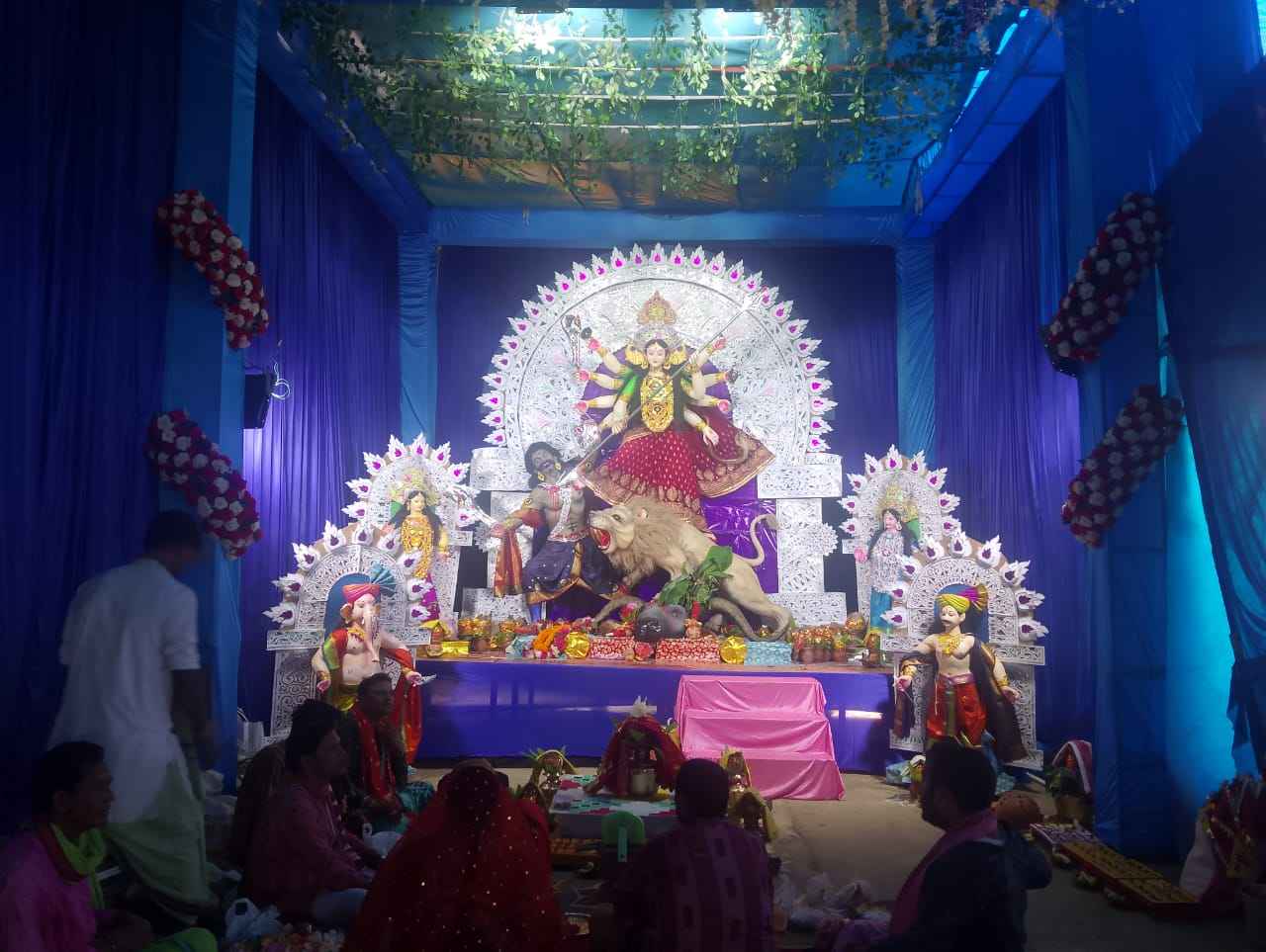
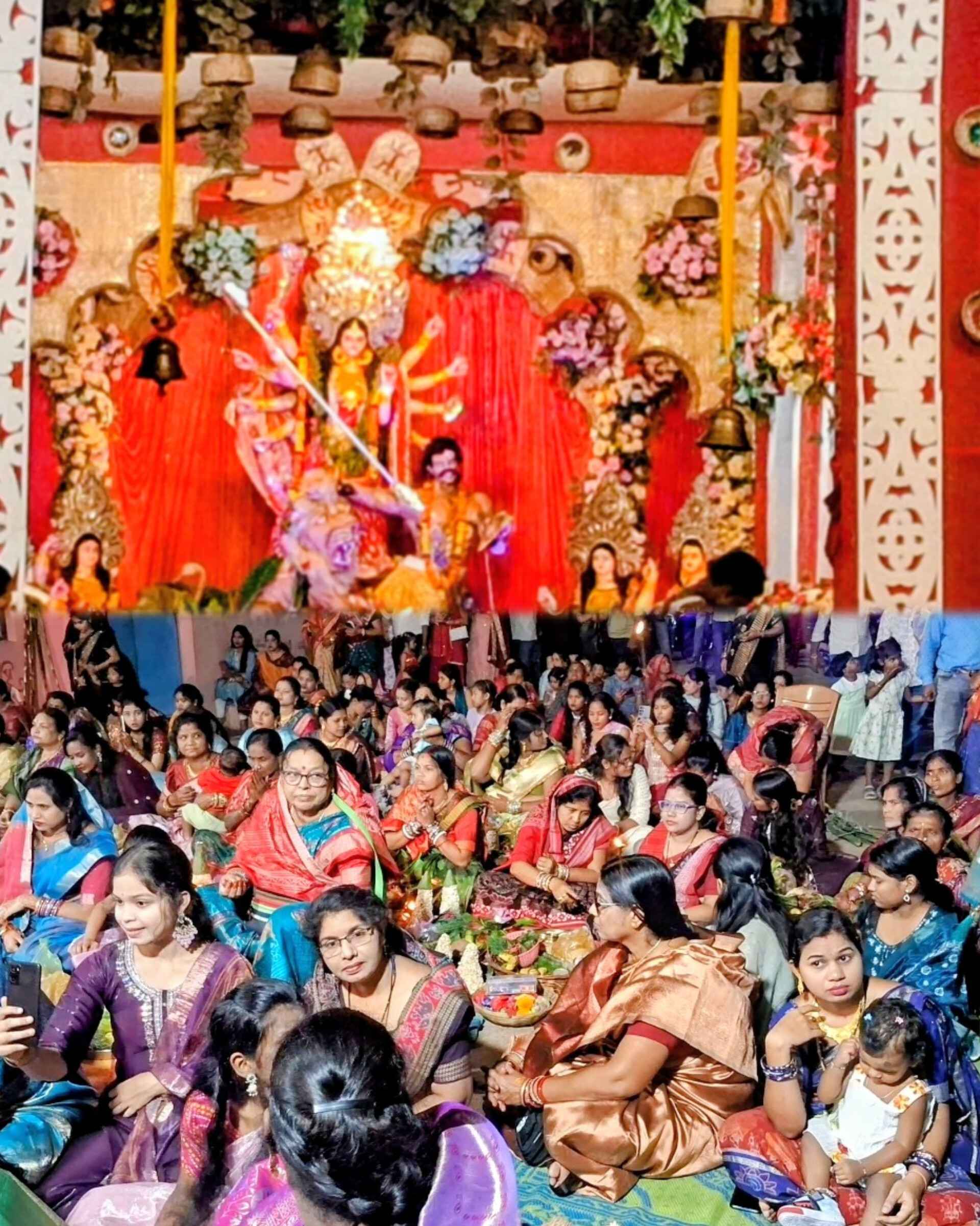
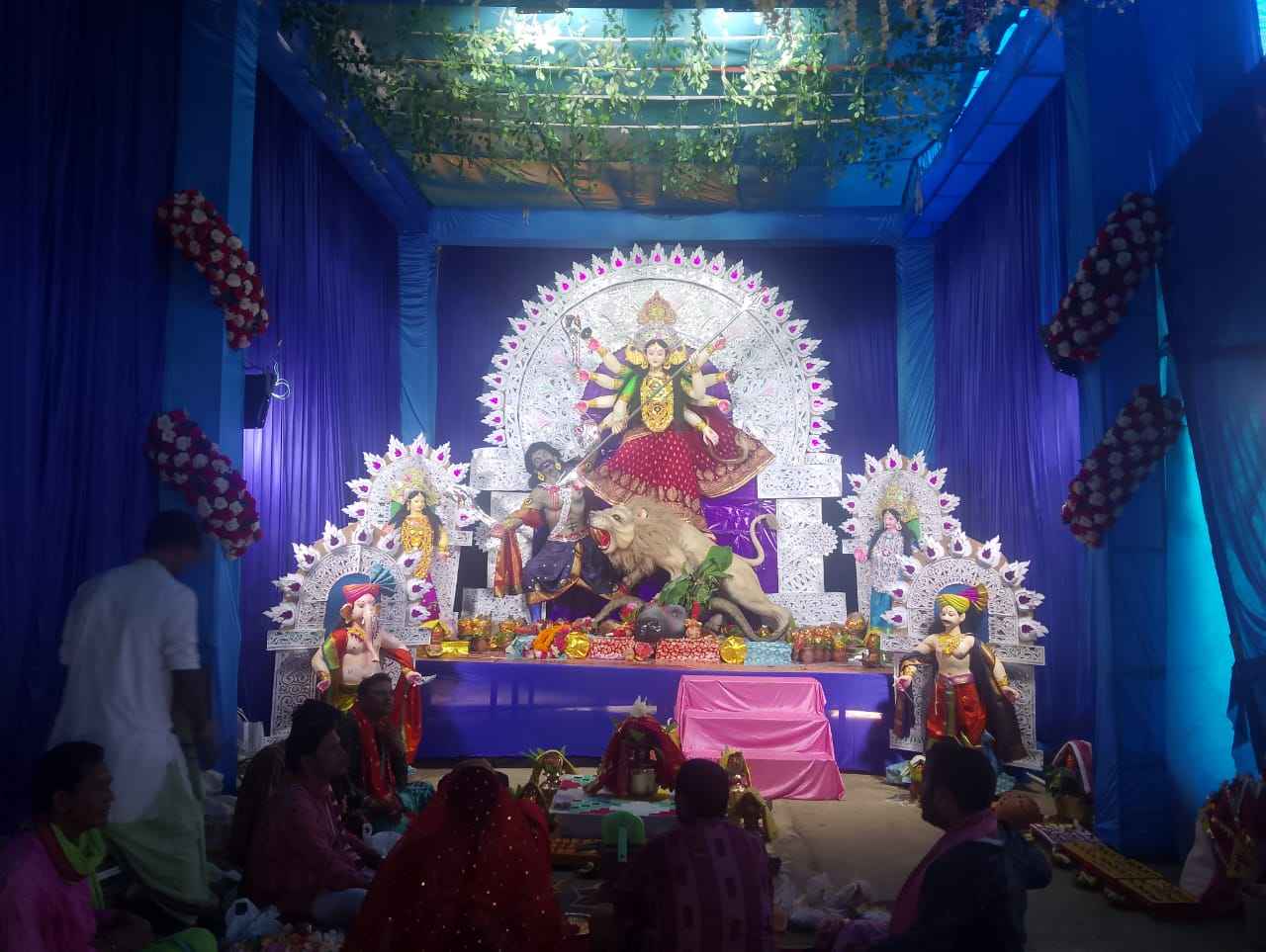
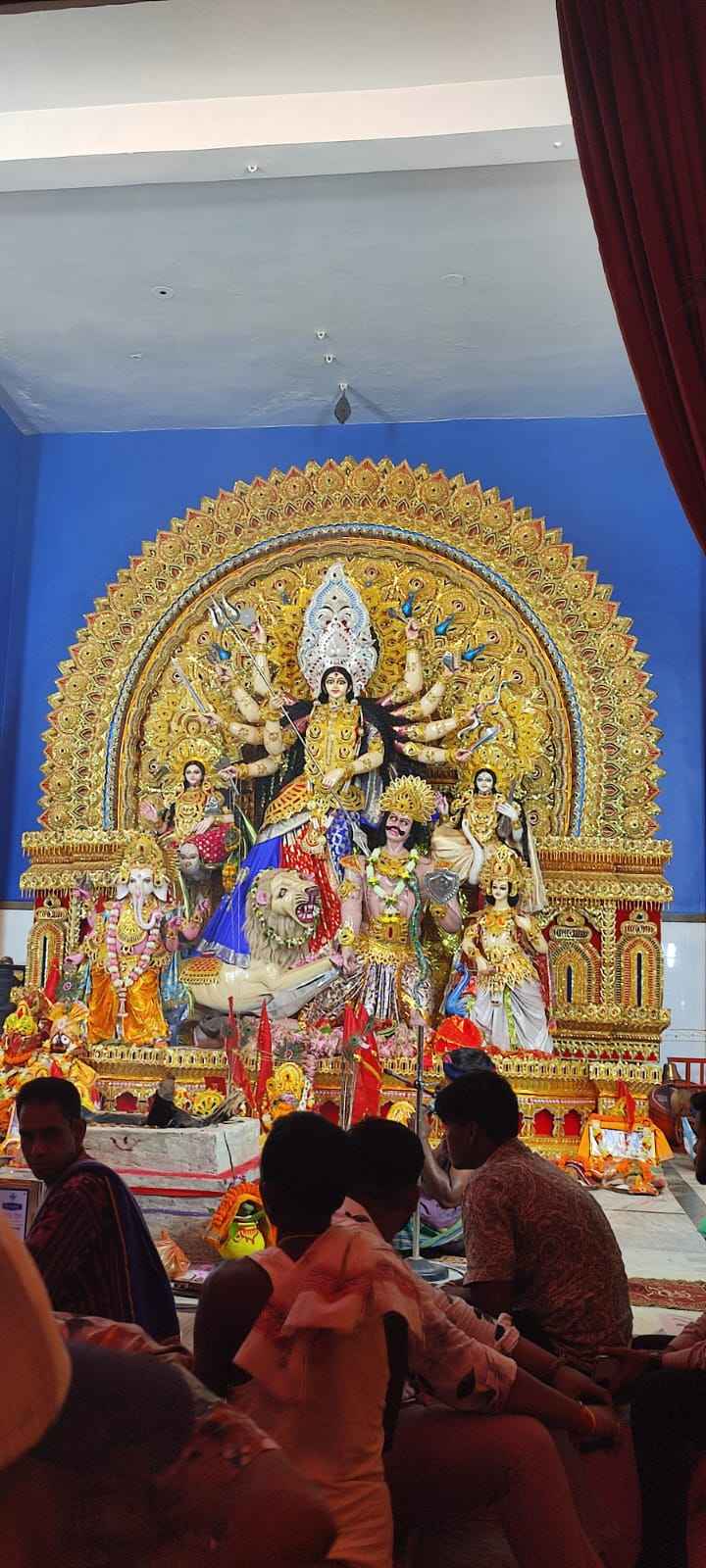
A visit to the Durga Puja pandals of Odisha reveals another important dimension of this religious philosophy. Alongside Maa Durga, the images of Maa Lakshmi and Maa Saraswati are commonly worshipped, accompanied in traditional iconography by Lord Ganesha and Lord Kartikeya.
Maa Durga is the manifestation of Mahamaya, the divine power that protects cosmic order and removes destructive forces. In the widely recognised Durga Puja iconographic tradition, her presence with Lakshmi and Saraswati brings together the ideals of strength, prosperity and knowledge.
Maa Lakshmi represents material well-being, generosity and auspiciousness. Maa Saraswati embodies learning, artistic expression, intellectual clarity and wisdom. Maa Durga represents courage, protection and the power to confront injustice.
The combination conveys a compelling civilisational lesson: strength must be guided by wisdom; prosperity must be accompanied by generosity; and knowledge must be directed towards the welfare of society.
Although the ten Mahavidyas constitute a distinct theological tradition within Shakta worship, the broader idea of Mahamaya expresses the many manifestations of the one supreme feminine power. The diversity of divine forms is therefore understood not as fragmentation, but as the expression of a comprehensive spiritual vision.
The religious traditions of Odisha acquire unique local expressions across its towns and cities. Puri, the sacred abode of Lord Jagannath, gives Maa Lakshmi a central place in the state’s devotional imagination. The relationship between Jagannath and Lakshmi, celebrated in temple traditions and illuminated by the Lakshmi Purana, connects divine worship with dignity, hospitality and social equality.
Bhubaneswar, the Temple City, reflects the interrelationship of Shaiva, Shakta and Vaishnava traditions. Its ancient temples and contemporary Durga Puja celebrations reveal the enduring presence of Odisha’s diverse religious heritage. Cuttack, renowned for its elaborate Durga Puja celebrations and magnificent silver filigree decorations, demonstrates how religious devotion becomes an expression of artistic excellence, craftsmanship and community identity. Kendrapara, revered as Tulasikhetra, is renowned for the sacred abode of Shri Siddha Baladevjew, whose spiritual presence enriches the religious heritage of Odisha. Alongside its celebrated worship of Lord Baladevjew, the district observes Gaja Lakshmi Puja with profound devotion, honouring Maa Lakshmi as the Goddess of prosperity, abundance and auspiciousness. These traditions blend Vaishnava devotion with the worship of Shakti, reflecting Kendrapara’s distinctive contribution to Odisha’s religious and cultural landscape. Tulasikhetra thus stands as a vibrant symbol of the harmonious coexistence of divine wisdom, spiritual faith and material well-being. Dhenkanal is particularly celebrated for its Gaja Lakshmi Puja, during which elaborate pandals and public festivities transform the worship of the Goddess into a major cultural event.
Sambalpur, associated with Maa Samaleswari, represents the powerful
Shakti tradition of Western Odisha. Its religious life reflects the close relationship between the Goddess, regional identity and the cultural heritage of the Mahanadi valley.
Balangir, historically connected with the former Patna State and the cultural legacy of Western Odisha, represents the region’s rich synthesis of folk traditions, Shakti worship and community life. The wider region’s devotion to Maa Patneswari reflects the enduring importance of the Goddess in its collective identity.
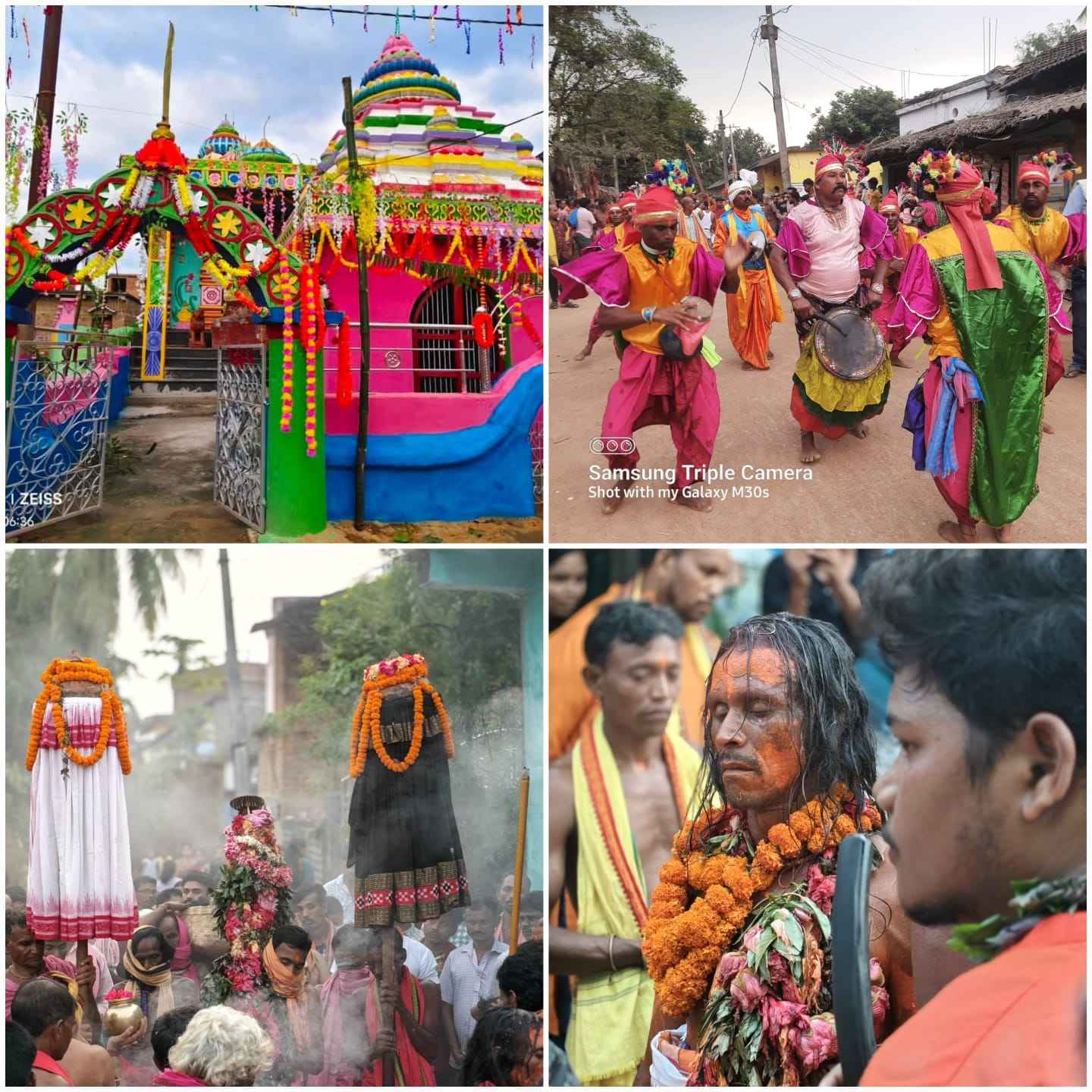
Berhampur and Ganjam preserve distinctive traditions of Shakti worship, folk performance and public festivals. Their cultural landscape reflects the interaction of temple traditions, local deities and popular religious expression. Jajpur, associated with Maa Biraja, holds an important place in Odisha’s Shakta heritage. Its religious significance demonstrates the historical depth of Goddess worship in the state. Koraput and the wider southern tribal belt reveal another dimension of Odisha’s spiritual landscape, where indigenous traditions, reverence for nature and local forms of the divine coexist with broader Hindu religious practices.Together, these places illustrate that Odisha’s religious identity is not confined to a single temple, ritual or the ological tradition. It has evolved through the interaction of classical Hindu thought, regional devotional literature, folk culture and community practices.
The significance of Kumar Purnima extends beyond the ceremonial worship of Maa Lakshmi. It invites us to reconsider what prosperity means in a society marked by economic inequality, rural distress and aspirations for educational advancement.
The Lakshmi Purana reminds us that wealth must be accompanied by justice. The worship of Maa Saraswati reminds us that knowledge should empower individuals and communities. The worship of Maa Durga reminds us that courage and collective determination are essential to overcome injustice.
For a state such as Odisha, with its rich cultural inheritance and aspirations for inclusive development, these teachings remain deeply relevant. Prosperity should reach rural households, tribal communities, women, farmers and socially marginalised people. Education should open pathways to dignity, while cultural traditions should strengthen social harmony rather than reinforce divisions.
Kumar Purnima, therefore, is not merely a celebration of the full moon or an occasion for seeking personal fortune. It is a reminder that a complete society requires material abundance, intellectual illumination, moral courage and compassion.
As the autumn moon illuminates the landscape of Odisha, the message of its Goddess traditions becomes clear: true prosperity emerges when Shakti empowers society, Lakshmi sustains life, Saraswati enlightens the mind, and devotion inspires equality and humanity.